
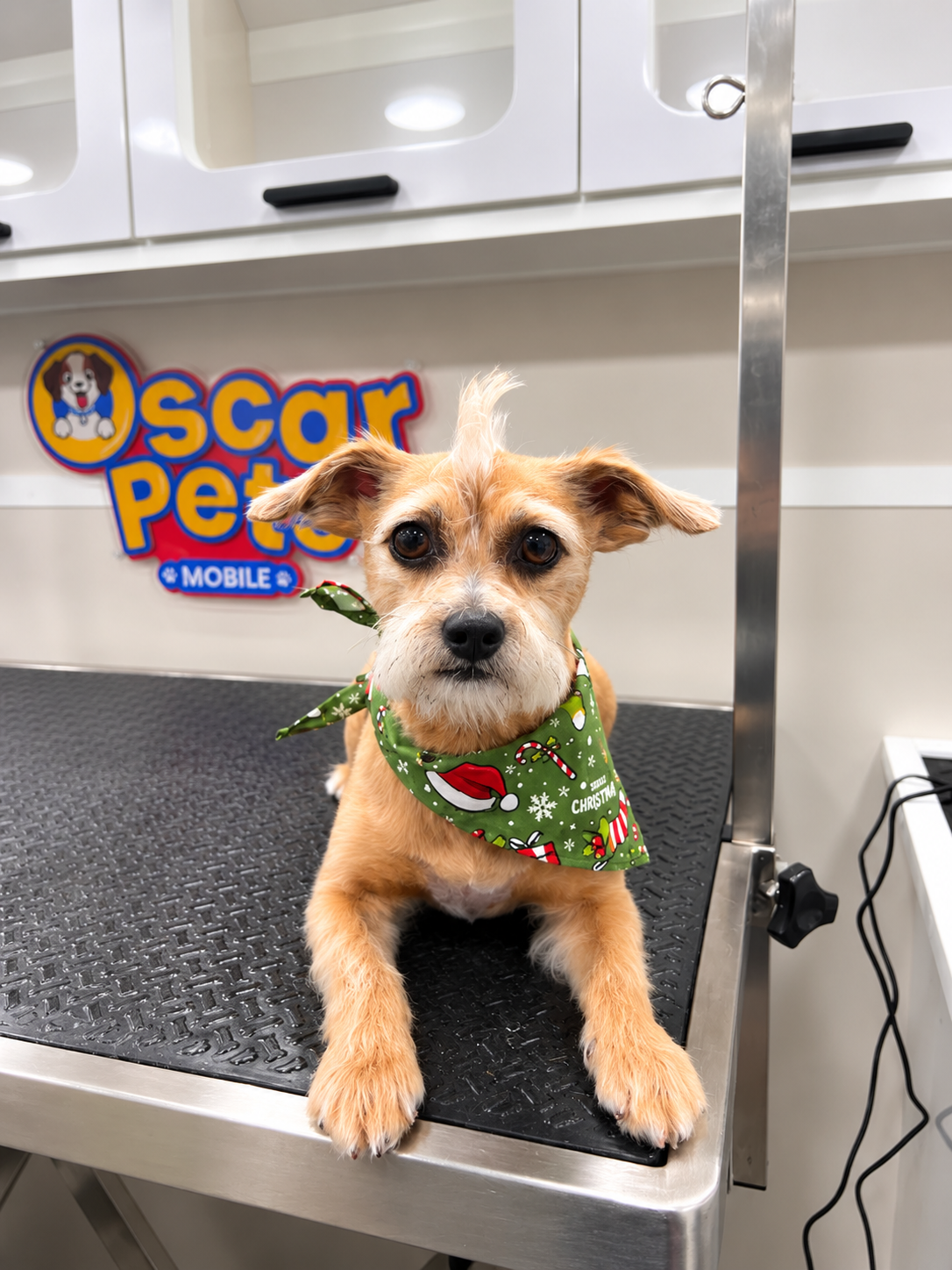
Dematting / Tangle Removal
Careful evaluation of tangles and mats with an approach tailored to your dog's coat condition and comfort.
What Is Involved
- Assessed individually for your dog's comfort
- Detangled where safe and gentle
- Tight mats may require a shorter clip for comfort
- Preventive home brushing tips shared after the visit
Who May Choose This
Dogs with tangles, knots, or matting in their coat — especially long-haired breeds, doodles, and double-coated breeds between grooming visits.
How It Works
Tell us about any mats or tangles when you request your appointment. The groomer will assess the coat in person before proceeding and discuss the best approach with you.
What Dematting And Tangle Removal Involves
Patient, Coat-By-Coat Assessment Before Any Brushing
Dematting is the careful process of working through tangles and mats in your dog's coat. Before any brushing begins, the groomer assesses the location, tightness, and severity of the mats and the condition of the skin underneath them. This assessment matters because mats can hide skin irritation, moisture, or even small wounds, and working blindly can cause discomfort.
Once the groomer understands the coat, they discuss a suitable approach with you. Some tangles are loose enough to gently brush or split apart with a detangling tool. Others are too tight or too close to the skin to brush out safely, and trimming them out is the kinder choice. The goal is always your dog's comfort, never forcing a painful detangle to preserve coat length.
Dematting can be added to our Bath Service, Mini Grooming, or Full Grooming packages, or requested as part of an individual services visit. Every package finishes with an accessory and a Exclusive Pet Fragrance Finish, so even a coat that needed trimming leaves your pup looking tidy and smelling fresh.
Why Mats Form And Why They Matter
Mats form when loose hair, dirt, and moisture tangle together and tighten into dense knots close to the skin. They are especially common behind the ears, under the legs, around the collar area, and near the rear, where friction and moisture collect. Curly and long-coated breeds like Poodles, Doodles, Shih Tzus, and Golden Retrievers are particularly prone to matting.
Beyond looking untidy, tight mats can pull on the skin, restrict movement, and trap moisture that leads to irritation. A coat that appears fine on the surface can hide significant matting underneath, which is why the groomer always checks the coat close to the skin during the visit. Catching mats early makes them easier and more comfortable to address.
- Common behind the ears, under the legs, and around the rear
- More frequent in curly, long, and double coats
- Can pull on the skin and trap moisture
- Often hidden beneath a smooth-looking topcoat
- Easier to address when caught early
How The Groomer Approaches Dematting
When you request an appointment, describe your dog's coat type and any matting you have noticed, including roughly where the mats are. The groomer will assess the coat in person at the start of the visit and recommend the gentlest realistic approach.
For loose tangles, the groomer may use a detangling spray and work through them slowly with a brush or splitting tool, pausing whenever your dog needs a break. For tight mats close to the skin, carefully trimming them out is often safer and more comfortable than forcing a brush through. If matting is widespread, the groomer may suggest a shorter all-over trim so your dog is comfortable and the coat can grow back evenly.
We will always explain the plan before we start, and we will be honest if trimming is the better choice for your dog's comfort. This patient, communicative approach is part of what makes mobile grooming in Orlando different from a rushed salon visit.
Who Dematting Suits And When Trimming Is Kinder
Dematting suits dogs with longer or curly coats that are prone to tangling but whose mats are still workable. If your dog is mildly to moderately matted and comfortable being brushed, a careful detangle can restore the coat without a major length change.
If mats are severe, tight against the skin, or your dog is painful when brushed, a shorter trim is usually the kinder option. Forcing a difficult detangle is not in your dog's best interest, and the groomer will advise you honestly rather than promise a result that would come at the cost of your dog's comfort. A fresh, shorter cut grows back healthy, and we can discuss a coat-care plan to prevent severe matting next time.
This honest approach is central to how we work. Pet families trust us because we tell them the truth about their dog's coat, even when that truth is that a trim is the kinder choice. You can read what other pet parents say about this approach on our reviews page.
The Tools And Techniques Behind Gentle Dematting
Dematting is not a single tool or motion, it is a careful process that uses the right tool for the right situation. A detangling spray can loosen light tangles and add slip to the coat, making them easier to work through. A slicker brush handles loose tangles near the surface, while a metal comb helps find and assess the tighter spots close to the skin.
For mats that are too tight to brush, the groomer may use a dematting rake or, when the mat is close to the skin and brushing would pull painfully, carefully slide scissors or clippers under the mat to release it. The choice of tool depends on the mat, the coat, and the dog, and the groomer shifts approaches as the visit progresses. Throughout, the goal is the same: address the tangles in the way that is most comfortable for your specific dog.
Understanding these tools helps set realistic expectations. Some mats come out with patient brushing, some need to be split apart, and some need to be trimmed. The groomer will show you what they find and explain the approach before they start, so you know exactly what is happening with your dog's coat.
What To Share Before A Dematting Appointment
When you request an appointment, the more you can tell us about your dog's coat, the better we can plan the visit. Helpful details include the breed or coat type, where the mats seem to be concentrated, roughly how long since the last grooming, and whether your dog is comfortable being brushed at home or tends to resist it.
It is also useful to mention whether your dog has been matted before and how that was handled, since some dogs develop anxiety around brushing after a difficult detangle. Knowing that in advance lets the groomer take a slower, gentler approach from the start. If your dog swims, plays in sprinklers, or gets caught in Central Florida's frequent afternoon rain, mention that too, since damp coats mat more quickly and we can plan accordingly.
Finally, let us know if you have a preference about coat length. If you would rather not deal with matting again, a shorter, easier-to-manage style might be the right call, and the groomer can advise on a length that suits your dog's lifestyle and your willingness to brush at home between visits.
Setting Realistic Expectations For A Matted Coat
It can be hard to hear that a severely matted coat needs to be trimmed short, especially if you were hoping to preserve length. But a mat that is tight against the skin is pulling on that skin with every movement your dog makes, and the kindest choice is always to prioritize comfort over coat length. Hair grows back, and a healthy, mat-free coat at a shorter length is far better than a long coat that hurts.
In some cases, the groomer may find that what looked like a manageable mat on the surface is hiding significant matting underneath, close to the skin. This is common in curly and double coats, where the topcoat can look smooth while the undercoat is packed tight. In those cases, the groomer will let you know what they have found and discuss the best path forward before proceeding.
This honesty is a feature, not a disappointment. Pet families return to us because we tell them the truth and we put their dog's comfort first. A trimmed coat grows back evenly and comfortably, and with a coat-care plan, the next groom can be the easy kind, not the difficult kind. For coat-care guidance between visits, explore our blog.
Preventing Mats Between Mobile Grooming Visits
Consistent brushing at home is the single most effective way to prevent mats. Focus on the friction zones, behind the ears, under the front legs, around the collar, and near the rear, and brush all the way down to the skin rather than just the topcoat. A slicker brush and a metal comb work well together for most long and curly coats.
Keeping the coat dry also helps, since damp hair tangles more easily. After walks in Central Florida's afternoon rain or a swim, a quick towel dry and gentle brush can stop tangles from setting. Regular grooming visits, every four to six weeks for most long-coated breeds, keep the coat manageable so matting never becomes severe. For more coat-care guidance, explore our blog or check our service areas to confirm we cover your neighborhood.
If you are unsure which brush suits your dog, the groomer can recommend one at your next visit and show you the technique that reaches the undercoat without scratching the skin. A few minutes of the right kind of brushing, a couple of times a week, makes an enormous difference in whether your dog's coat stays comfortable between grooms.
Local Considerations For Central Florida Coats
Florida's humidity and frequent rain mean coats stay damp more often, which accelerates matting. Dogs who swim, play in sprinklers, or get caught in afternoon showers are especially prone to tangles if the coat is not dried and brushed promptly. Regular mobile grooming helps stay ahead of this climate-driven matting without the stress of a salon trip.
We serve pet families from Deltona to Kissimmee, including Orlando, Windermere, and Doctor Phillips. Because we come to your home, it is easy to keep a consistent grooming schedule that prevents severe matting year-round.
The combination of humidity, warm temperatures, and an active outdoor lifestyle means Central Florida dogs often need more frequent grooming than dogs in drier climates. A regular mobile schedule keeps the coat healthy and comfortable and gives the groomer a chance to catch small tangles before they become painful mats.
Why A Consistent Grooming Schedule Prevents Severe Matting
The single best thing you can do for a long or curly coat is to keep a consistent grooming schedule. When grooming happens every four to six weeks, the coat never gets long enough for mats to tighten into the dense, painful knots that are hard to brush out. Each visit is shorter, more comfortable, and less stressful for your dog, because there is less work to do and the tangles are still loose enough to address gently.
When grooming is inconsistent, the opposite happens. A coat left too long between visits can develop mats that sit close to the skin and pull with every movement, making the detangle a long, uncomfortable process that may end in a shorter cut than you wanted. The convenience of mobile grooming makes it much easier to keep a consistent schedule, because there is no salon trip to plan around and the groomer comes to you on a routine that fits your life.
This is the quiet advantage of a regular mobile grooming relationship. The groomer comes to know your dog's coat, knows where it tends to mat first, and can catch those spots early every visit. You can read what other pet families say about this kind of consistent, attentive care on our reviews page, and learn more about how we work on our about page.
Choosing The Right Coat Length For Your Lifestyle
One of the most practical decisions you can make for a matting-prone coat is choosing a length that fits your willingness to brush at home. A longer, fluffier coat looks beautiful, but it needs consistent, thorough brushing several times a week to stay mat-free between grooms. A shorter, more manageable length still looks polished but is much easier to maintain and far less prone to severe matting.
There is no single right answer, and the groomer is happy to help you find the balance that works for your dog and your routine. If you love brushing and have the time, a longer coat can be wonderful. If your days are busy and brushing is a struggle, a shorter trim that still suits your dog's breed may be the kinder, more practical choice. The groomer can recommend a length and a brushing plan that keeps your dog comfortable and your home routine manageable.
This honest, practical conversation is part of what makes a mobile grooming relationship feel different from a one-off salon visit. We get to know your dog and your life, and we help you make choices that keep your dog comfortable year-round rather than just looking good for a day. For more coat-care guidance and grooming tips, explore our blog and our full range of individual services.
How Dematting Fits Into A Full Grooming Visit
Dematting is rarely a standalone service in practice. It is usually woven into a larger grooming visit, where the groomer addresses the tangles as part of preparing the coat for the bath, the tidy, or the haircut you have selected. When you book a Full Grooming visit and mention matting, the groomer plans the time and the approach so the detangle happens at the right point in the visit, before the bath so the water does not tighten the mats further.
For lighter matting, the detangle may be a quick, gentle step that adds only a little time to the visit. For more significant matting, the groomer may need to budget extra time or discuss a shorter trim before starting, so the visit stays comfortable for your dog. Either way, the cost of addressing matting is included in the personalized quote we provide based on your dog and the services you select, there are no public prices, and you will know what to expect before the visit begins.
Because dematting is part of a larger visit, it also benefits from the calm of the mobile setting. A dog who needs a patient detangle does best in a quiet, one-on-one environment where the groomer can pause, reassess, and adjust the approach without the pressure of a salon schedule. This is one of the reasons mobile grooming in Orlando is well suited to dogs with matting-prone coats.
What To Do When You Notice Mats Between Grooms
If you find a mat between grooming visits, the most helpful thing you can do is note where it is and how it feels, then mention it when you book the next groom. Resist the urge to cut it out yourself with scissors, since mats often sit close to the skin and home scissors are a common cause of accidental nicks. A groomer has the right tools and the angle to release a tight mat safely, and it is a quick job in trained hands.
You can gently brush the areas around the mat to keep the surrounding coat from joining it, but do not force a brush through the mat itself, since that pulls on the skin and can make your dog anxious about brushing. If the mat seems to be bothering your dog, or if you find several, it may be time to move your grooming visit up rather than wait. Catching mats early is always more comfortable for your dog than letting them tighten.
When you request an appointment, describe what you have found so the groomer can plan enough time and the right approach. This kind of open communication between visits is a big part of what makes a regular mobile grooming in Orlando relationship work so well. For more coat-care guidance, explore our blog and our service areas page.
Frequently Asked Questions
Common Questions
Let's Discuss Your Pet's Grooming
Other Individual Services
Reach Out Anytime
Phone
(407) 775-8865Service Area
From Deltona to Kissimmee, FL — mobile grooming at your door.