
What Is De-shedding, and What Does It Involve?
September 2026 • 6 min read
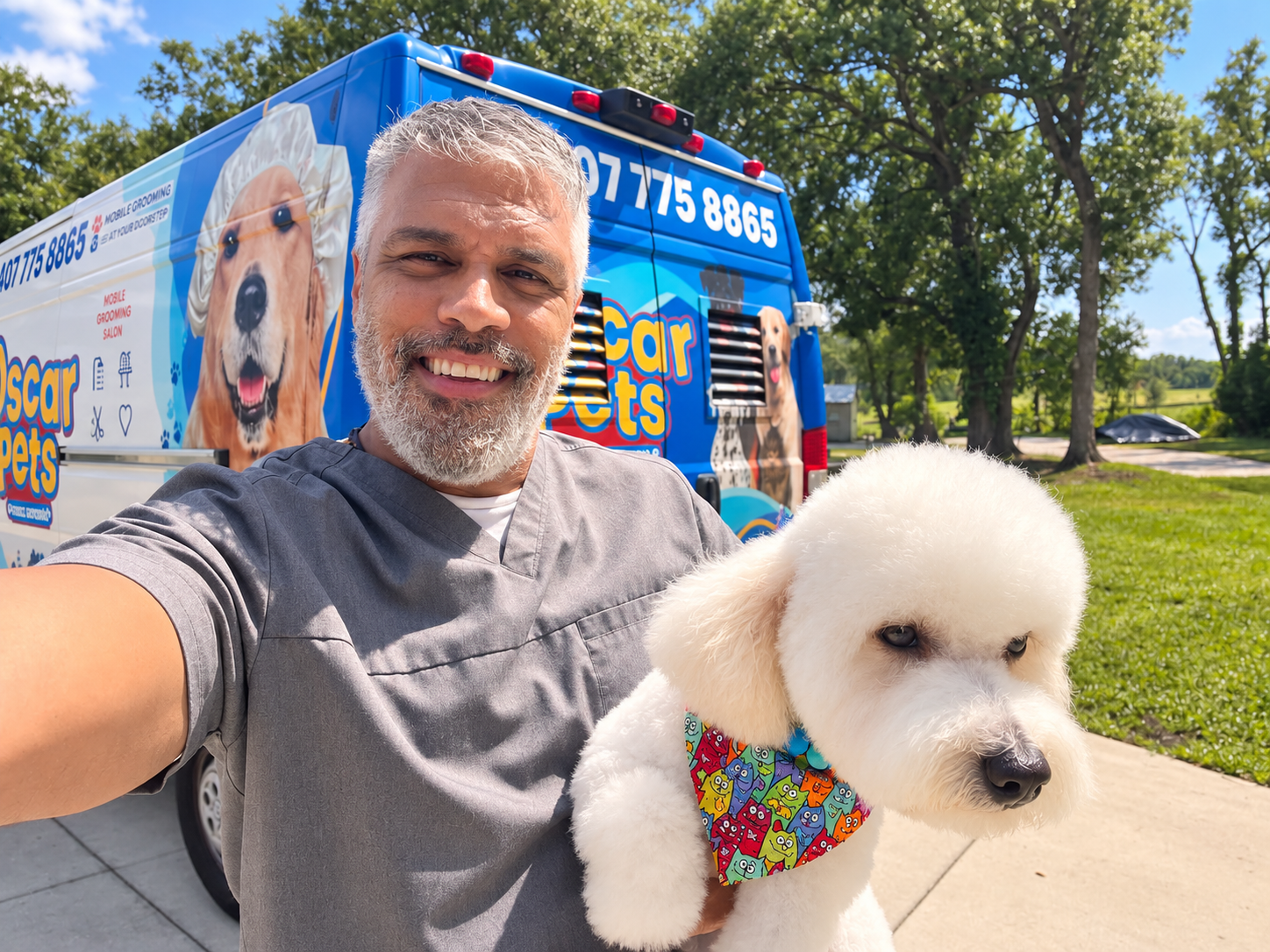
What de-shedding is, how it removes loose coat, and why it reduces shedding between visits without stopping shedding completely.
De-shedding is a grooming service that removes loose coat from your dog's undercoat to reduce shedding between visits. At Oscar Pets Mobile, it is one of the eight individual services you can request alongside any grooming package. It helps manage loose fur but does not stop shedding completely — shedding is a natural process, and de-shedding reduces the amount of loose fur around your home. This article explains what de-shedding is and what it involves. We serve the area from Deltona to Kissimmee; call (407) 775-8865.
What De-shedding Is
De-shedding is a grooming service that removes loose coat from your dog's undercoat. Dogs with double coats or heavy undercoats shed loose fur as part of their natural coat cycle. De-shedding helps remove that loose fur before it ends up on your furniture and clothes.
At Oscar Pets Mobile, de-shedding is an individual service. You can request it alongside any grooming package — Bath Service, Mini Grooming, or Full Grooming. The groomer uses appropriate tools to reach the undercoat and remove loose fur.
See the de-shedding page for the official details. Read our individual services overview to understand how it relates to the packages.
What It Involves
De-shedding involves:
- Using specialized tools to reach the undercoat.
- Removing loose fur that is ready to shed.
- Working through the coat systematically.
- Reducing the amount of loose fur between visits.
The groomer works through the coat to reach the undercoat, where loose fur accumulates. The process is thorough but gentle. The amount of loose fur removed depends on your dog's coat type and the season — dogs with heavy undercoats shed more, especially during seasonal coat blows.
De-shedding is often combined with a bath, which helps loosen the loose fur. Read our guide on what is included in Bath Service.
What De-shedding Does Not Do
It is important to understand what de-shedding does not do:
- It does not stop shedding completely. Shedding is natural, and de-shedding reduces — not eliminates — loose fur.
- It does not change your dog's coat type.
- It is not a treatment for skin conditions.
- It does not replace regular grooming.
De-shedding reduces the amount of loose fur between visits, but your dog will continue to shed. Regular de-shedding visits help manage the shedding. Read our guide on planning coat maintenance between de-shedding appointments.
If your dog has excessive shedding, skin irritation, or coat changes, consult your veterinarian — these may indicate an underlying issue.
Who Benefits From De-shedding
De-shedding is most beneficial for dogs with double coats or heavy undercoats, such as retrievers, shepherds, huskies, and similar breeds. These dogs shed significant amounts of loose fur, especially during seasonal coat blows.
Dogs with single coats shed less and may not benefit as much from de-shedding. The groomer can advise on whether de-shedding is appropriate for your dog's coat type. Read our guide on de-shedding vs. dematting to understand how it differs from addressing tangles.
If you are not sure whether your dog has an undercoat, ask the groomer. They can assess the coat and recommend the right services.
How It Relates to the Packages
De-shedding is an individual service, not part of the grooming packages. You can add it to any package. The packages include:
- Bath Service: bath, ear cleaning, nail trimming, accessory, perfume finish.
- Mini Grooming: everything in Bath Service plus sanitary and paw-area care.
- Full Grooming: everything in Mini Grooming plus a haircut.
De-shedding complements these packages by addressing loose coat. Read our guide on one specific grooming need or a complete package to understand when to add it.
The team can help you decide whether de-shedding is right for your dog.
Seasonal Considerations
Dogs with double coats often shed more during seasonal coat blows — typically in spring and fall. During these times, de-shedding can remove large amounts of loose fur. Scheduling de-shedding during these periods helps manage the shedding.
Between seasonal blows, regular de-shedding visits help keep loose fur under control. The groomer can advise on a schedule based on your dog's coat type and shedding patterns. Read our guide on planning coat maintenance between de-shedding appointments.
Regular brushing at home also helps remove loose fur between visits.
What to Expect After the Service
After de-shedding, you should notice less loose fur around your home for a period. How long the effect lasts depends on your dog's coat type and shedding cycle. Regular de-shedding visits help maintain the effect.
The groomer can advise on brushing at home to extend the results. For dogs with heavy undercoats, a slicker brush or undercoat rake may be appropriate. Ask the groomer what tools are right for your dog's coat.
Read our guide on choosing a dog haircut for maintenance considerations.
How the Shedding Cycle Works in Dogs
Understanding how the shedding cycle works in dogs helps pet parents set realistic expectations for de-shedding and plan their grooming visits effectively. Shedding is a natural process, and while de-shedding helps manage loose fur, it does not stop shedding entirely. Knowing the biology behind shedding helps you understand what de-shedding can and cannot achieve.
Dogs shed as part of the natural hair growth cycle. Each hair follicle goes through three phases. The anagen phase is the active growth phase, during which the hair grows. The catagen phase is a transitional phase, during which growth stops. The telogen phase is the resting phase, after which the hair is shed and a new hair begins growing in the same follicle. This cycle occurs continuously across the coat, with different hairs in different phases at any given time.
Dogs with single coats shed at a relatively consistent rate throughout the year. Each hair completes its cycle independently, so shedding is gradual and ongoing. Dogs with double coats, which include a topcoat and an undercoat, shed more heavily during seasonal transitions. The undercoat, which provides insulation, is released in larger quantities as temperatures change. This is what is commonly called blowing the coat, and it typically occurs in spring and fall. Read our guide on de-shedding vs. dematting to understand how these two services address different needs.
De-shedding during grooming helps remove the loose fur that is in the telogen phase, the fur that is ready to be shed but has not yet fallen out. By removing this loose fur, de-shedding reduces the amount of fur that ends up on your furniture, clothing, and floors. However, because the hair growth cycle continues, new fur will enter the telogen phase and become ready to shed. This is why de-shedding does not stop shedding, it manages the loose fur that is present at the time of the grooming visit. See the de-shedding page for what the service includes.
In Central Florida's warm climate, double-coated dogs may shed more consistently rather than in sharp seasonal bursts. The year-round warmth means the temperature signals that trigger heavy seasonal shedding are less pronounced. This means regular de-shedding throughout the year may be more appropriate than waiting for a seasonal shed. Read our guide on planning coat maintenance between de-shedding appointments for a maintenance schedule.
Several factors affect the rate and amount of shedding, including breed, coat type, health, diet, and stress. If you notice a sudden change in your dog's shedding pattern, such as significantly more or less shedding than usual, consult your veterinarian. Changes in shedding can sometimes indicate underlying health issues. Grooming complements but does not replace veterinary care.
If your dog sheds heavily and you want to manage the loose fur, regular de-shedding during grooming visits helps. Share your dog's breed and coat type when you book. Explore our de-shedding service, our Full Grooming package, and our services overview.
De-shedding and the Grooming Packages: How to Combine Services
Combining de-shedding with the grooming packages at Oscar Pets Mobile allows pet parents to address loose coat alongside the core grooming care their dog needs. This section explores how to integrate de-shedding into a grooming visit and what to consider when planning the combination.
De-shedding is an individual service, not part of the grooming packages. You can add it to any package — Bath Service, Mini Grooming, or Full Grooming. The team confirms suitability and scheduling. When you add de-shedding to a package, the groomer performs the de-shedding step as part of the visit, alongside the bath, ear cleaning, nail trimming, and other components included in the package. Read our guide on understanding individual grooming services.
The most common combination is de-shedding added to a Bath Service or Full Grooming visit. For a dog with a heavy undercoat that needs a bath but not a haircut, adding de-shedding to the Bath Service provides loose-coat removal alongside the bath, ear cleaning, nail trimming, accessory, and perfume finish. For a dog that needs a haircut as well, adding de-shedding to Full Grooming provides comprehensive coat care — the haircut shapes the coat, and the de-shedding removes loose undercoat. Read our guide on what does Full Grooming include.
The de-shedding process is most effective when combined with a bath. Bathing with a de-shedding shampoo helps loosen the undercoat, and the high-velocity blow drying during the bath blows out large quantities of loose fur. The groomer then uses de-shedding tools to remove remaining loose fur. This combination of bathing, blow-drying, and tool-based removal makes the de-shedding thorough. Read our guide on what is included in the Bath Service.
When planning the visit, share your dog's breed, coat type, and shedding patterns. Double-coated breeds such as Golden Retrievers, German Shepherds, Huskies, and Labrador Retrievers benefit most from de-shedding. Single-coated and low-shedding breeds may not benefit as much. The groomer can assess the coat and advise on whether de-shedding is appropriate. If you are not sure whether your dog has an undercoat, ask the groomer. Read our guide on de-shedding vs. dematting.
Consider the timing of de-shedding visits. For double-coated dogs in Central Florida, where the warm climate may lead to more consistent year-round shedding rather than sharp seasonal bursts, regular de-shedding every four to six weeks may be more effective than waiting for a seasonal shed. During periods of heavier shedding, more frequent visits may be warranted. The groomer can advise on a schedule based on your dog's specific shedding patterns. Read our guide on planning coat maintenance between de-shedding appointments.
If your dog has both loose coat and tangles, the groomer can address both. De-shedding removes loose fur, while dematting addresses tangles and mats. The groomer assesses the coat condition and plans the visit to address both needs. Share the coat condition honestly when you book. Read our guide on how to describe your dog's additional grooming needs.
The mobile environment is convenient for combining services because the groomer comes to your driveway and works one-on-one with your dog. We serve the area from Deltona to Kissimmee. Explore our de-shedding page, our services overview, and our contact page.
Frequently Asked Questions
What is de-shedding?
It is a grooming service that removes loose coat from your dog's undercoat to reduce shedding between visits.
Does de-shedding stop shedding completely?
No. Shedding is natural. De-shedding reduces the amount of loose fur but does not stop shedding entirely.
Is de-shedding included in the packages?
No. It is an individual service you can add to any package — Bath Service, Mini Grooming, or Full Grooming.
Which dogs benefit most from de-shedding?
Dogs with double coats or heavy undercoats, such as retrievers, shepherds, and huskies. They shed more, especially during seasonal coat blows.
How often should I schedule de-shedding?
It depends on your dog's coat type and shedding cycle. The groomer can advise on a schedule. Seasonal coat blows may warrant more frequent visits.
Can I brush my dog at home to help?
Yes. Regular brushing with appropriate tools helps remove loose fur between visits. Ask the groomer what tools are right for your dog's coat.
Does de-shedding treat skin conditions?
No. It is a grooming service that removes loose coat. If your dog has skin irritation or excessive shedding, consult your veterinarian.
How do I request de-shedding?
Mention it when you book. Share your dog's breed, coat type, and whether they have a heavy undercoat. Call (407) 775-8865.
Ready to Discuss de-shedding?
Want to manage your dog's shedding with a de-shedding service? Contact Oscar Pets Mobile at (407) 775-8865 or send an appointment request. Our team will discuss your dog's coat, confirm suitability, and provide a personalized quote.
This article provides general grooming education and does not replace advice from your veterinarian. Grooming needs and product suitability vary by pet. Contact Oscar Pets Mobile to discuss your dog's needs and appointment availability.
Request a Grooming Appointment
Call us at (407) 775-8865 or visit our contact page to send a request.
Go to Contact Page