
De-shedding vs. Dematting: Two Different Coat-Care Needs
September 2026 • 6 min read
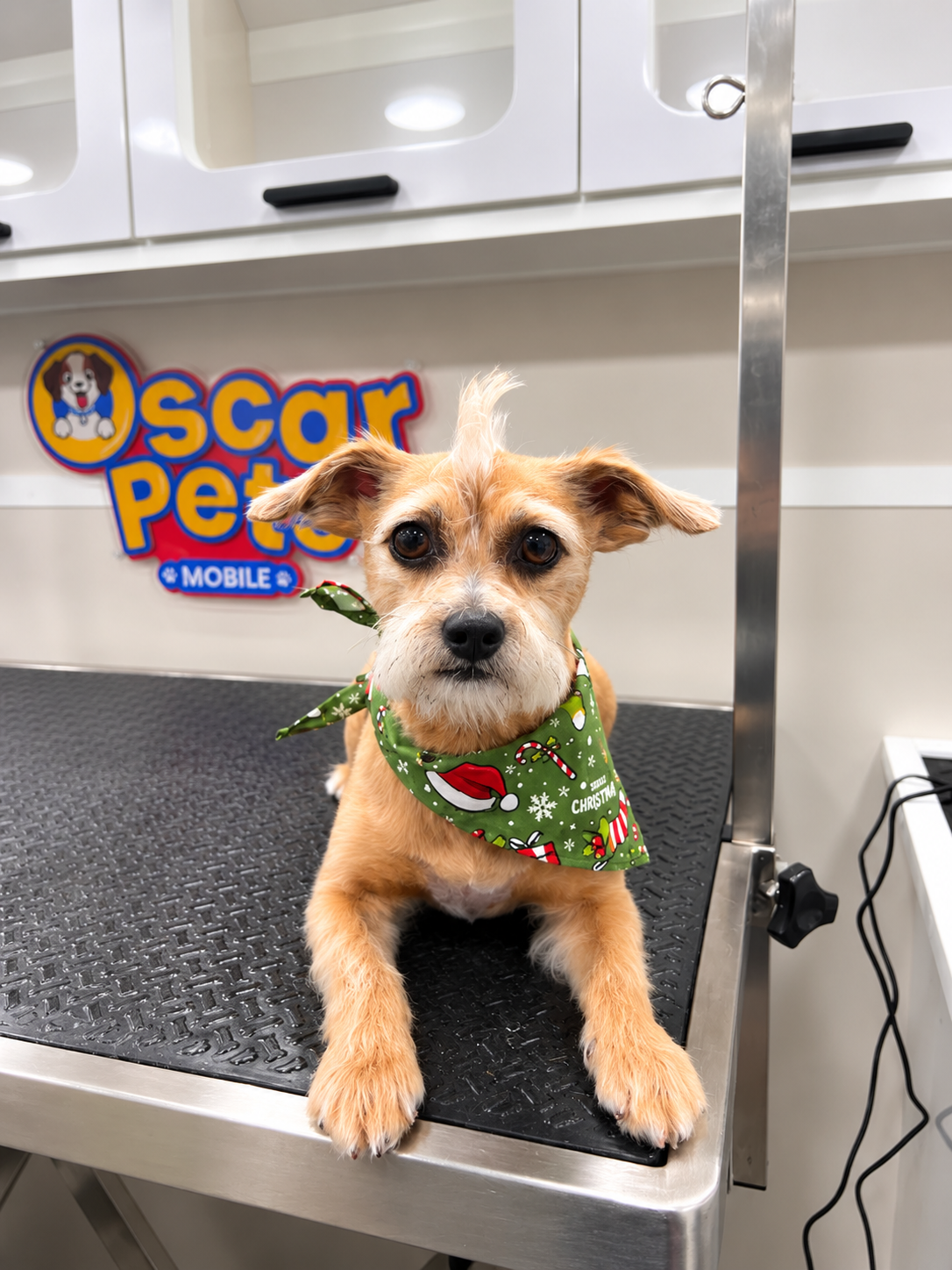
How de-shedding and dematting differ — one removes loose coat, the other addresses tangles and mats — and why they serve different coat-care needs.
De-shedding and dematting are two different coat-care services that address different needs. De-shedding removes loose coat from the undercoat to reduce shedding. Dematting addresses tangles and mats that have formed in the coat. At Oscar Pets Mobile, both are individual services you can request alongside any grooming package. Understanding the difference helps you choose the right care for your dog's coat. This article compares the two. We serve the area from Deltona to Kissimmee; call (407) 775-8865.
De-shedding: Loose-Coat Removal
De-shedding is a service that removes loose coat from your dog's undercoat. It addresses fur that is ready to shed — the loose fur that ends up on your furniture and clothes. The groomer uses specialized tools to reach the undercoat and remove loose fur.
De-shedding is most beneficial for dogs with double coats or heavy undercoats. It reduces shedding between visits but does not stop shedding completely. Read our guide on what is de-shedding for the full details.
See the de-shedding page for the official service details.
Dematting: Tangle and Mat Care
Dematting is a service that addresses tangles and mats in your dog's coat. Tangles are mild knots; mats are tighter, compacted clumps of fur close to the skin. The groomer assesses the coat condition and determines the best approach — careful brushing, gentle separation, or trimming for severe mats.
Dematting is not about loose fur — it is about knots and compacted fur. It is most relevant for dogs with long or curly coats that are prone to tangling. Read our guide on what is dematting for the full details.
See the dematting page for the official service details.
Key Differences
Here are the key differences between de-shedding and dematting:
- Purpose: De-shedding removes loose coat; dematting addresses tangles and mats.
- Target: De-shedding targets the undercoat's loose fur; dematting targets knots and compacted fur.
- Coat type: De-shedding suits double-coated breeds; dematting suits long or curly coats prone to tangling.
- Outcome: De-shedding reduces shedding; dematting removes knots and mats for coat comfort.
Both can be part of the same visit if your dog has both loose coat and tangles. Read our guide on one specific grooming need or a complete package.
When to Choose Each
Choose de-shedding when your dog has a heavy undercoat and sheds significantly. This is common in double-coated breeds, especially during seasonal coat blows. De-shedding reduces the loose fur around your home.
Choose dematting when your dog has tangles or mats in the coat. This is common in long or curly coats, especially in areas with friction like behind the ears and under the legs. Dematting addresses the knots and keeps the coat comfortable.
If your dog has both issues, request both services. The groomer can assess the coat and recommend the right approach. Read our guide on how to describe your dog's additional grooming needs.
Can You Get Both?
Yes. You can request both de-shedding and dematting in the same visit, alongside a grooming package. The groomer assesses the coat and addresses both loose coat and tangles. This is common for dogs with long, thick coats that both shed and tangle.
When you book, describe the coat condition honestly — mention both shedding and any tangles or mats. The groomer plans the visit accordingly. Read our guide on how to discuss matted fur before grooming.
The team can help you plan the right combination of services.
What Each Does Not Do
De-shedding does not address tangles or mats — it removes loose fur, not knots. If your dog has mats, you need dematting, not de-shedding. Similarly, dematting does not reduce shedding — it addresses knots, not loose fur.
Also, neither service treats skin conditions. If your dog has skin irritation, excessive shedding, or coat changes, consult your veterinarian. These services are grooming care, not medical treatment. Read our guide on what is de-shedding and what is dematting.
How They Relate to the Packages
Both de-shedding and dematting are individual services, not part of the grooming packages. You can add either or both to any package — Bath Service, Mini Grooming, or Full Grooming.
If your dog needs a haircut as well, Full Grooming includes one. You can add de-shedding and dematting to Full Grooming for comprehensive coat care. Read our guide on how a dog's grooming haircut is planned.
The team can help you decide which services to add based on your dog's coat condition.
Tools and Techniques Used for Each Service
Understanding the tools and techniques used for de-shedding and dematting helps pet parents appreciate why these are distinct services that require different approaches. The groomer selects tools based on the specific coat-care need, and using the wrong tool for the wrong purpose can be ineffective or even uncomfortable for the dog. This section explains the tools typically associated with each service.
For de-shedding, the groomer uses tools designed to reach the undercoat and remove loose fur. These may include undercoat rakes, which have long teeth that penetrate through the topcoat to reach the loose undercoat fur. De-shedding tools with specialized blades or edges catch and remove the loose fur that is ready to shed. Slicker brushes help remove loose fur from the surface of the coat. The groomer may also use a high-velocity blow dryer during the bath to blow out loose fur from the undercoat, which is one of the most effective ways to remove large quantities of loose coat. The combination of bathing, blow-drying, and tool-based removal makes de-shedding thorough. See the de-shedding page for what the service includes.
For dematting, the groomer uses different tools designed to address tangles and mats. These may include dematting combs, which have specialized teeth that help split and separate tangled fur. Slicker brushes help work through looser tangles. For tight mats that are close to the skin, the groomer may carefully use scissors or clippers to trim the mat out, as forcing a brush through a tight mat can pull on the skin and cause discomfort. The groomer assesses each mat individually and chooses the gentlest realistic approach. Read our guide on what is dematting for how the groomer assesses coat condition.
The key distinction is that de-shedding tools are designed to remove loose fur that is already released from the follicle, while dematting tools are designed to address fur that has tangled and compacted together. Using a de-shedding tool on a mat will not remove the mat, and using a dematting tool on loose fur will not efficiently remove the loose undercoat. This is why the groomer uses different tools for each purpose. Read our guide on what is de-shedding for more on the de-shedding process.
The groomer works at your dog's pace during both services. If your dog is sensitive about certain areas being brushed or handled, the groomer adjusts the approach. The one-on-one mobile environment helps because the groomer can take breaks and work patiently without the pressure of other dogs waiting. Share your dog's temperament when you book so the groomer can plan accordingly. Read our guide on how to describe your dog's additional grooming needs.
If your dog has both loose coat and tangles, the groomer can use both sets of tools during the visit. The order and approach depend on the coat condition, and the groomer plans the visit to address both needs effectively. Explore our de-shedding and dematting services, our Full Grooming package, and our services overview.
How to Request the Right Care
To request the right coat care, call (407) 775-8865 or use our appointment-request form. Share your dog's breed, coat type, whether they shed heavily, and whether they have tangles or mats. The groomer assesses the coat and recommends de-shedding, dematting, or both.
We serve the area from Deltona to Kissimmee, including Orlando and Altamonte Springs. Explore our de-shedding page, our dematting page, and our services overview.
Common Coat-Care Challenges and How to Address Them
Pet parents often encounter specific coat-care challenges between de-shedding appointments, and knowing how to address them helps maintain the coat's condition and prevent problems from developing. This section covers common challenges and practical solutions.
One common challenge is loose fur accumulating on furniture, clothing, and floors between visits. Even after a thorough de-shedding visit, dogs continue to shed, and loose fur builds up over time. Regular brushing at home is the most effective solution. For double-coated dogs, use an undercoat rake or de-shedding tool two to three times per week, focusing on the back, sides, and hindquarters where loose fur accumulates. For short-coated dogs, a rubber curry brush helps remove loose fur. Consistency is key — regular brushing removes loose fur before it ends up around the home. Read our guide on what is de-shedding.
Another challenge is tangles and mats forming between visits, particularly for dogs with long or curly coats. Even if the primary need is de-shedding, a dog with a combination coat may develop tangles. Regular brushing with a slicker brush helps prevent tangles. Focus on areas prone to friction — behind the ears, under the legs, and around the collar. If you find a tight mat, do not force a brush through it or cut it with scissors. Note it and mention it when you book the next visit. The groomer can address it safely with dematting. Read our guide on how to discuss matted fur before grooming.
Seasonal coat blows present a significant challenge for owners of double-coated dogs. During these periods, the dog sheds large amounts of loose fur, which can seem overwhelming. In Central Florida's warm climate, double-coated dogs may shed more consistently year-round rather than in sharp seasonal bursts, but periods of heavier shedding still occur. During these times, increase the frequency of home brushing and consider scheduling a de-shedding visit. The groomer can remove large quantities of loose fur in a single visit, providing significant relief. Read our guide on de-shedding vs. dematting.
Skin irritation and coat changes are challenges that may indicate an underlying health issue. If you notice excessive shedding, bald patches, redness, flakiness, or a dull coat, consult your veterinarian. These signs can indicate allergies, hormonal imbalances, nutritional deficiencies, or skin conditions. Grooming complements but does not replace veterinary care. The groomer can flag concerns they notice during the visit, but a groomer cannot diagnose or treat medical conditions. Read our guide on what to ask when choosing a mobile dog groomer.
Choosing the right brushing tools can be a challenge, as there are many options and the right choice depends on the coat type. Using the wrong tool can be ineffective or uncomfortable for the dog. Ask the groomer for specific recommendations based on your dog's breed and coat type. Common tools include slicker brushes for general brushing, undercoat rakes for double coats, de-shedding tools for loose fur, and rubber curry brushes for short coats. Read our guide on choosing a dog haircut for maintenance considerations.
Maintaining consistency with home brushing is a challenge for busy pet parents. Building brushing into a regular routine — such as a few minutes several times a week — is more effective than occasional long sessions. Set a schedule that works for you and your dog, and stick to it. The combination of regular home brushing and scheduled de-shedding visits produces the best results. Read our guide on one specific grooming need or a complete package. We serve the area from Deltona to Kissimmee. Explore our de-shedding page, our services overview, and our contact page.
Frequently Asked Questions
What is the difference between de-shedding and dematting?
De-shedding removes loose coat from the undercoat to reduce shedding. Dematting addresses tangles and mats that have formed in the coat.
Can I get both in the same visit?
Yes. If your dog has both loose coat and tangles, the groomer can address both. Describe the coat condition honestly when you book.
Does de-shedding remove mats?
No. De-shedding removes loose fur, not knots. If your dog has mats, you need dematting.
Does dematting reduce shedding?
No. Dematting addresses knots and mats, not loose fur. To reduce shedding, request de-shedding.
Which dogs need de-shedding?
Dogs with double coats or heavy undercoats, like retrievers and huskies, benefit most. They shed more, especially during seasonal coat blows.
Which dogs need dematting?
Dogs with long or curly coats that are prone to tangling, especially in areas with friction like behind the ears and under the legs.
Are these services included in the packages?
No. Both are individual services you can add to any package.
How do I request the right care?
Call (407) 775-8865 or use our appointment-request form. Share your dog's breed, coat type, shedding level, and whether they have tangles.
Ready to Discuss de-shedding and dematting?
Not sure whether your dog needs de-shedding, dematting, or both? Contact Oscar Pets Mobile at (407) 775-8865 or send an appointment request. Our team will assess your dog's coat and provide a personalized quote.
This article provides general grooming education and does not replace advice from your veterinarian. Grooming needs and product suitability vary by pet. Contact Oscar Pets Mobile to discuss your dog's needs and appointment availability.
Request a Grooming Appointment
Call us at (407) 775-8865 or visit our contact page to send a request.
Go to Contact Page