
Detangling or a Shorter Groom: Why Coat Condition Matters
September 2026 • 7 min read
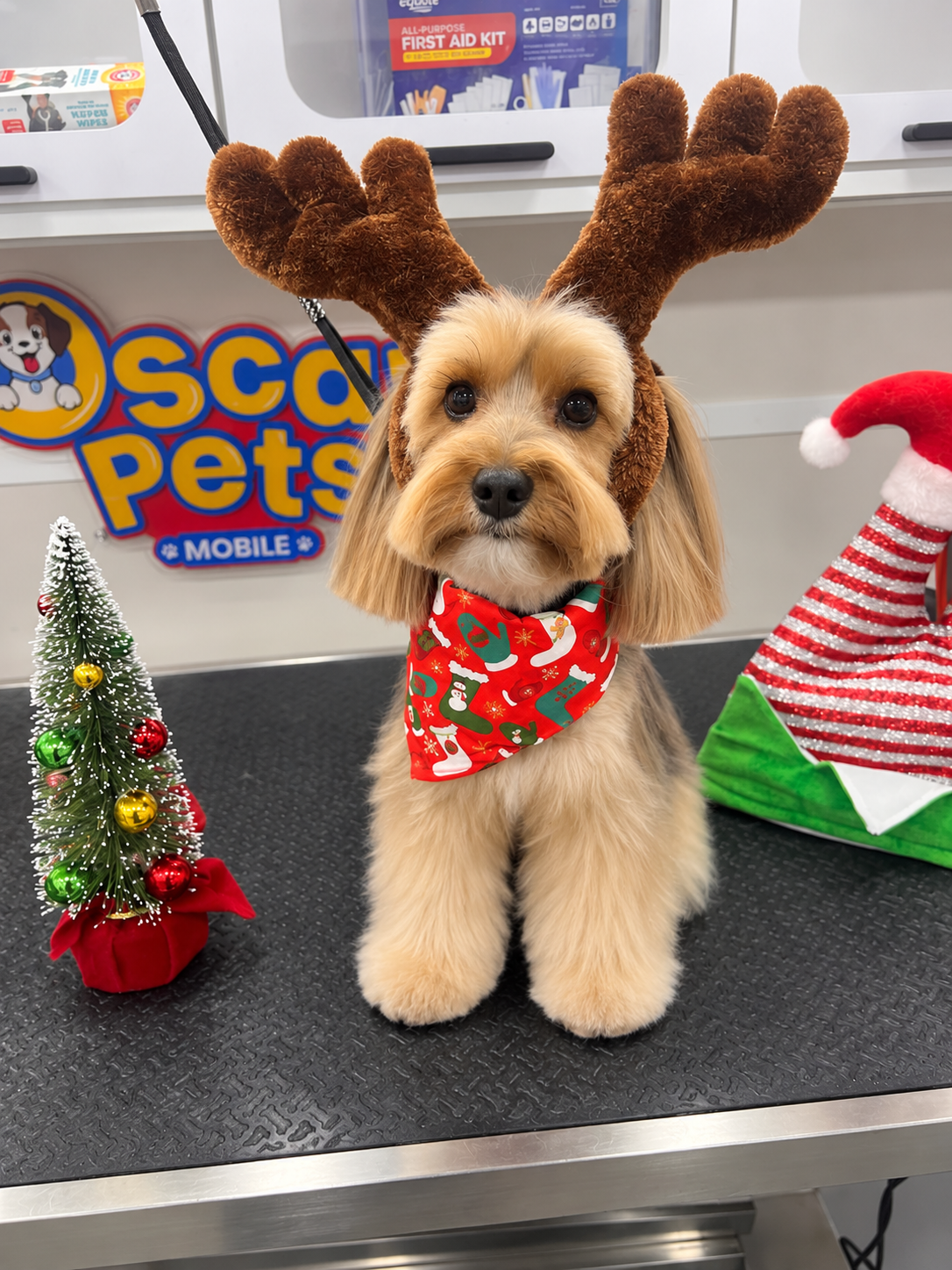
How coat condition determines whether detangling or a shorter groom is the right approach — and why the groomer prioritizes your dog's comfort.
When your dog's coat has tangles or mats, the groomer faces a choice: detangle the coat or recommend a shorter groom. The right approach depends on the coat condition — how severe the mats are, how close they are to the skin, and what is most comfortable for your dog. At Oscar Pets Mobile, the groomer prioritizes your dog's comfort above preserving coat length. This article explains why coat condition matters and how the groomer decides between detangling and a shorter groom. We serve the area from Deltona to Kissimmee; call (407) 775-8865.
Why Coat Condition Matters
Coat condition is the most important factor in deciding between detangling and a shorter groom. The groomer assesses the coat to determine:
- How severe the tangles and mats are.
- How close the mats are to the skin.
- Whether the mats can be safely brushed out.
- How your dog is responding to handling.
- What is most comfortable for your dog.
Mild tangles can usually be brushed out. Tight mats that are close to the skin may be painful to separate, and forcing the process can cause discomfort..
When Detangling Is Possible
Detangling is possible when the tangles and mats are mild enough to be safely brushed out. This typically means:
- The tangles are loose and not close to the skin.
- The mats can be gently separated with appropriate tools.
- Your dog is comfortable with the process.
- The coat is not severely compacted.
In these cases, the groomer can carefully brush out the tangles and mats, preserving the coat's length..
When a Shorter Groom Is the Kinder Option
A shorter groom is the kinder option when the mats are too tight or too close to the skin to be safely brushed out. This typically means:
- The mats are severe and compacted.
- The mats are close to the skin and would be painful to separate.
- Brushing would cause your dog significant discomfort.
- The coat is matted over large areas.
In these cases, trimming or clipping the mats out is the responsible choice..
The Groomer's Assessment Process
The groomer assesses the coat during the visit to determine the best approach. The assessment involves:
- Running hands through the coat to feel for mats.
- Checking areas prone to matting — behind the ears, under the legs, around the collar, in the sanitary area.
- Evaluating how close the mats are to the skin.
- Observing your dog's response to handling.
- Determining whether brushing or trimming is appropriate.
Based on this assessment, the groomer recommends an approach..
Why Early Intervention Matters
Early intervention matters because mild tangles are easier to address than severe mats. If tangles are addressed early — through regular brushing and grooming visits — they can usually be brushed out without needing a shorter groom.
If tangles are left unaddressed, they can develop into tight mats that are close to the skin. At that point, detangling may not be possible, and a shorter groom may be the only humane option..
How This Relates to the Packages
If your dog has tangles or mats, the groomer may recommend Full Grooming — which includes a haircut — if a shorter groom is needed to remove mats humanely. If the tangles are mild and can be brushed out, you can request dematting as an individual service alongside any package.
The team can help you decide based on your dog's coat condition. When you book, describe the coat condition honestly so the groomer can plan accordingly..
What to Expect After the Visit
After the visit, ask the groomer about coat care to prevent future tangles and mats. This may include:
- A recommended brushing schedule based on your dog's coat type.
- Appropriate brushing tools for home use.
- Tips for focusing on prone areas.
- A recommended grooming schedule.
If your dog had a shorter groom due to severe matting, the coat will grow back..
How to Request the Right Approach
To request the right approach for your dog's coat, call (407) 775-8865 or use our appointment-request form. Share your dog's breed, coat type, the condition of the coat (including any tangles or mats), and your dog's temperament. The groomer will assess the coat during the visit and recommend detangling or a shorter groom based on what is most comfortable for your dog.
We serve the area from Deltona to Kissimmee, including Orlando and Altamonte Springs. Explore our dematting page, our Full Grooming page, and our services overview.
Why Coat Condition Determines the Approach
The groomer assesses the coat condition before deciding on an approach to mats and tangles. If the mats are loose or recent, careful brushing with the right tools may resolve them. If the mats are tight, close to the skin, or extensive, trimming may be the safest and most comfortable option. The groomer prioritizes your dog's comfort and will not force a brushing approach that causes distress..
After the Visit: Preventing Future Matting
After a grooming visit that addresses matting, preventing future matting is the key to keeping your dog's coat comfortable and manageable between visits. This section covers practical steps you can take at home to reduce the likelihood of mats forming and how to work with the groomer on a long-term coat-care plan.
Matting forms when loose fur tangles and compacts together, often in areas with friction such as behind the ears, under the legs, around the collar, and near the base of the tail. Regular brushing is the most effective way to prevent mats, as it removes loose fur before it can tangle and compact. The frequency and tools depend on your dog's coat type. For curly and wavy coats, such as Poodles and Shih Tzus, daily brushing with a slicker brush is often necessary. For long, flowing coats, brushing several times a week helps. For double coats, regular brushing with an undercoat rake manages loose fur. Ask the groomer for specific tool recommendations. Read our guide on planning coat maintenance between de-shedding appointments.
Focus on the areas most prone to matting. Behind the ears is a common spot because the fur there is soft and friction from the dog's movements causes tangles. Under the legs and in the armpits, friction from walking and running causes matting. Around the collar, the friction from the collar itself can cause tangles. Near the base of the tail, the fur can tangle from the dog's movements. Pay extra attention to these areas when brushing. Read our guide on what is dog dematting.
If you find a small tangle while brushing, try to gently work it out with your fingers or a slicker brush. Start at the edge of the tangle and work inward, holding the fur at the base to avoid pulling the skin. If the tangle is tight and close to the skin, do not force it — forcing a brush through a tight mat can pull the skin and cause discomfort. Do not attempt to cut mats out with scissors at home, as the mat is often close to the skin and scissors can easily cause injury. Instead, note the location and mention it when you book the next visit. The groomer can address it safely. Read our guide on detangling or a shorter groom.
Consider the role of the haircut in preventing matting. If your dog's coat is prone to matting and you find it difficult to keep up with brushing, a shorter haircut may be more practical. Shorter styles require less maintenance between visits and are less prone to matting. Discuss this with the groomer — they can recommend a style that suits your dog's coat type and your ability to maintain it. Read our guide on choosing a dog haircut.
Environmental factors can contribute to matting. Water — from swimming, rain, or even damp grass — can cause the fur to tangle more easily. If your dog gets wet, dry and brush the coat promptly to prevent tangles. Dirt and debris can also contribute to matting, so regular bathing helps. Collars and harnesses can cause friction that leads to tangles, so check those areas regularly. Read our guide on how to describe your dog's additional grooming needs.
Work with the groomer on a long-term coat-care plan. Share your brushing routine, the tools you use, and any challenges you face. The groomer can advise on a brushing schedule, tool recommendations, and a grooming frequency that keeps the coat manageable. For dogs with continuously growing coats, regular Full Grooming — typically every four to eight weeks depending on the style — prevents the coat from becoming overgrown and matted. Read our guide on what does Full Grooming include. We serve the area from Deltona to Kissimmee. Explore our dematting page, our Full Grooming page, and our contact page.
Coat Care for Different Coat Types
Different coat types have different coat-care needs, and understanding how de-shedding and dematting relate to specific coat types helps pet parents choose the right services for their dog. This section explores the coat-care needs of common coat types and how de-shedding and dematting fit into each.
Double coats consist of a topcoat and an undercoat. The topcoat is made of guard hairs that protect the dog from sun, rain, and dirt. The undercoat is made of soft, dense fur that provides insulation. Double-coated breeds include Golden Retrievers, German Shepherds, Siberian Huskies, Labrador Retrievers, and Bernese Mountain Dogs. These dogs shed their undercoat, especially during seasonal coat blows, and benefit significantly from de-shedding. De-shedding removes the loose undercoat fur that is ready to shed, reducing the amount of fur around the home. Double-coated dogs generally should not be shaved, as shaving can damage the coat's natural insulation and affect how it grows back. Read our guide on what is de-shedding.
Curly and wavy coats, such as those of Poodles, Bichon Frises, and Shih Tzus, have continuously growing hair that does not shed in the same way as double coats. These coats are prone to tangling and matting, especially in areas with friction. For these dogs, dematting and regular haircuts are the primary coat-care needs. De-shedding is generally less relevant for these coat types because they do not have a heavy undercoat that sheds. However, some curly-coated dogs may have a combination of coat types, and the groomer can assess what is needed. Read our guide on what is dog dematting.
Long, flowing coats, such as those of Yorkshire Terriers, Maltese, and Afghan Hounds, have hair that grows long and can tangle easily. These coats require regular brushing to prevent matting and benefit from dematting when tangles form. De-shedding is generally not the primary need for these coat types. Regular Full Grooming with haircuts keeps the coat at a manageable length. Read our guide on choosing a dog haircut.
Short coats, such as those of Beagles, Boxers, and Dobermans, have short fur that sheds at a moderate rate. These dogs do not typically need dematting, as their short fur does not tangle. De-shedding can help manage loose fur, particularly for breeds with short, dense coats that shed noticeably. Regular bathing and nail trimming through the Bath Service or Mini Grooming keeps these dogs comfortable. Read our guide on what is included in the Bath Service.
Wire coats, such as those of Terriers, have a harsh, wiry texture. These coats may be maintained through hand-stripping or clipping, depending on the dog and the owner's preferences. Wire coats do not typically mat in the same way as curly coats, but they may need specific grooming techniques. The groomer can advise on what is appropriate. Read our guide on how a dog's grooming haircut is planned.
The key takeaway is that de-shedding and dematting serve different coat types and different needs. De-shedding is primarily for double-coated dogs that shed loose undercoat. Dematting is primarily for long, curly, and wavy coats that tangle. Some dogs may need both, and the groomer assesses the coat condition to determine the right approach. Read our guide on how to describe your dog's additional grooming needs. We serve the area from Deltona to Kissimmee. Explore our de-shedding and dematting pages, and our contact page.
Frequently Asked Questions
How does the groomer decide between detangling and a shorter groom?
The groomer assesses the coat condition — severity of mats, how close they are to the skin, and your dog's comfort. Mild tangles can be brushed out; severe mats may require a shorter groom.
Why might a shorter groom be necessary?
Tight mats close to the skin can be painful to brush out. A shorter groom removes the mats humanely and relieves discomfort. The groomer prioritizes your dog's comfort over coat length.
Can I request detangling specifically?
Yes. You can request dematting as an individual service. The groomer will assess whether detangling is possible based on the coat condition.
How can I prevent needing a shorter groom?
Address tangles early through regular brushing and grooming visits. Mild tangles can usually be brushed out; severe mats may require a shorter groom.
Should I remove mats at home?
Do not remove tight mats with scissors at home — it is dangerous. Leave mat removal to a professional groomer. Regular brushing at home is fine for prevention.
Will the coat grow back after a shorter groom?
Yes. If your dog had a shorter groom due to matting, the coat will grow back. Regular brushing and grooming can prevent matting from recurring.
How do I know which approach is right?
The groomer assesses the coat during the visit and recommends the best approach. Describe the coat condition honestly when you book so they can plan.
How do I request a visit?
Call (407) 775-8865 or use our appointment-request form. Share your dog's breed, coat type, coat condition, and temperament. The groomer assesses and recommends the right approach. The groomer assesses the coat condition before deciding on an approach. If the mats are loose or recent, careful brushing may resolve them. If the mats are tight, close to the skin, or extensive, trimming may be the safest and most comfortable option. The groomer prioritizes your dog's comfort and will not force a brushing approach that causes distress. Share what you know about your dog's coat history when you book. The groomer assesses the coat condition before deciding on an approach. If the mats are loose or recent, careful brushing may resolve them. If the mats are tight, close to the skin, or extensive, trimming may be the safest and most comfortable option. The groomer prioritizes your dog's comfort and will not force a brushing approach that causes distress. Share what you know about your dog's coat history when you book. The groomer assesses the coat condition before deciding on an approach. If the mats are loose or recent, careful brushing with the right tools may resolve them. If the mats are tight, close to the skin, or extensive, trimming may be the safest and most comfortable option. The groomer prioritizes your dog's comfort and will not force a brushing approach that causes distress. Share what you know about your dog's coat history, including how long mats have been present and whether your dog has been groomed regularly. This information helps the groomer plan the best approach for your dog's comfort and coat health. The groomer assesses the coat condition before deciding on an approach. If the mats are loose or recent, careful brushing with the right tools may resolve them. If the mats are tight, close to the skin, or extensive, trimming may be the safest and most comfortable option. The groomer prioritizes your dog's comfort and will not force a brushing approach that causes distress. Share what you know about your dog's coat history, including how long mats have been present and whether your dog has been groomed regularly. This information helps the groomer plan the best approach for your dog's comfort and coat health. The groomer assesses the coat condition before deciding on an approach. If the mats are loose or recent, careful brushing with the right tools may resolve them. If the mats are tight, close to the skin, or extensive, trimming may be the safest and most comfortable option. The groomer prioritizes your dog's comfort and will not force a brushing approach that causes distress. Share what you know about your dog's coat history, including how long mats have been present and whether your dog has been groomed regularly. This information helps the groomer plan the best approach for your dog's comfort and coat health. The groomer assesses the coat condition before deciding on an approach. If the mats are loose or recent, careful brushing with the right tools may resolve them. If the mats are tight, close to the skin, or extensive, trimming may be the safest and most comfortable option. The groomer prioritizes your dog's comfort and will not force a brushing approach that causes distress. Share what you know about your dog's coat history, including how long mats have been present and whether your dog has been groomed regularly. This information helps the groomer plan the best approach for your dog's comfort and coat health. The groomer assesses the coat condition before deciding on an approach. If the mats are loose or recent, careful brushing with the right tools may resolve them. If the mats are tight, close to the skin, or extensive, trimming may be the safest and most comfortable option. The groomer prioritizes your dog's comfort and will not force a brushing approach that causes distress. Share what you know about your dog's coat history, including how long mats have been present and whether your dog has been groomed regularly. This information helps the groomer plan the best approach for your dog's comfort and coat health. The groomer assesses the coat condition before deciding on an approach. If the mats are loose or recent, careful brushing with the right tools may resolve them. If the mats are tight, close to the skin, or extensive, trimming may be the safest and most comfortable option. The groomer prioritizes your dog's comfort and will not force a brushing approach that causes distress. Share what you know about your dog's coat history, including how long mats have been present and whether your dog has been groomed regularly. This information helps the groomer plan the best approach for your dog's comfort and coat health.
Ready to Discuss dematting and coat care?
Not sure whether your dog needs detangling or a shorter groom? Contact Oscar Pets Mobile at (407) 775-8865 or send an appointment request. Our team will assess your dog's coat, discuss the options, and provide a personalized quote.
This article provides general grooming education and does not replace advice from your veterinarian. Grooming needs and product suitability vary by pet. Contact Oscar Pets Mobile to discuss your dog's needs and appointment availability.
Request a Grooming Appointment
Call us at (407) 775-8865 or visit our contact page to send a request.
Go to Contact Page